

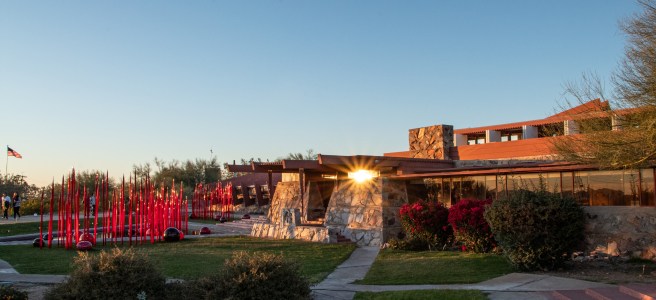
As you know from my posts I love a good old home tour, especially if it’s a Frank LLoyd Wright home. You can imagine my delight when I discovered there is a program at his Taliesin West home outside Phoenix where you can have drinks at sunset. It’s called Sunset and Sips and happens two Thursdays out of the month. Since I was working during regular tour hours when I was in the area, it was perfect for me. The only downside is that there isn’t a formal tour, and you don’t get to see all of the house, but the unique experience completely makes up for it.


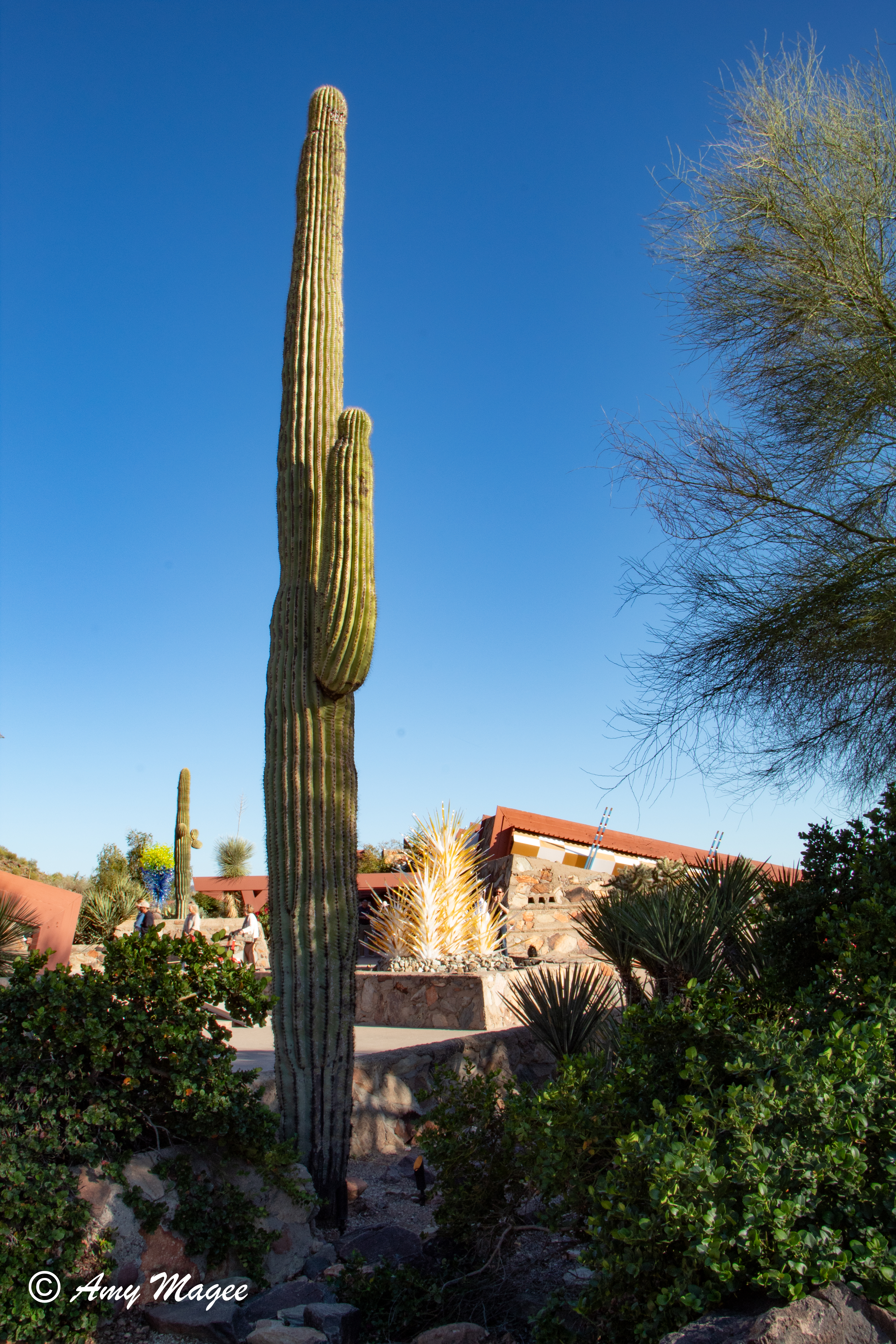
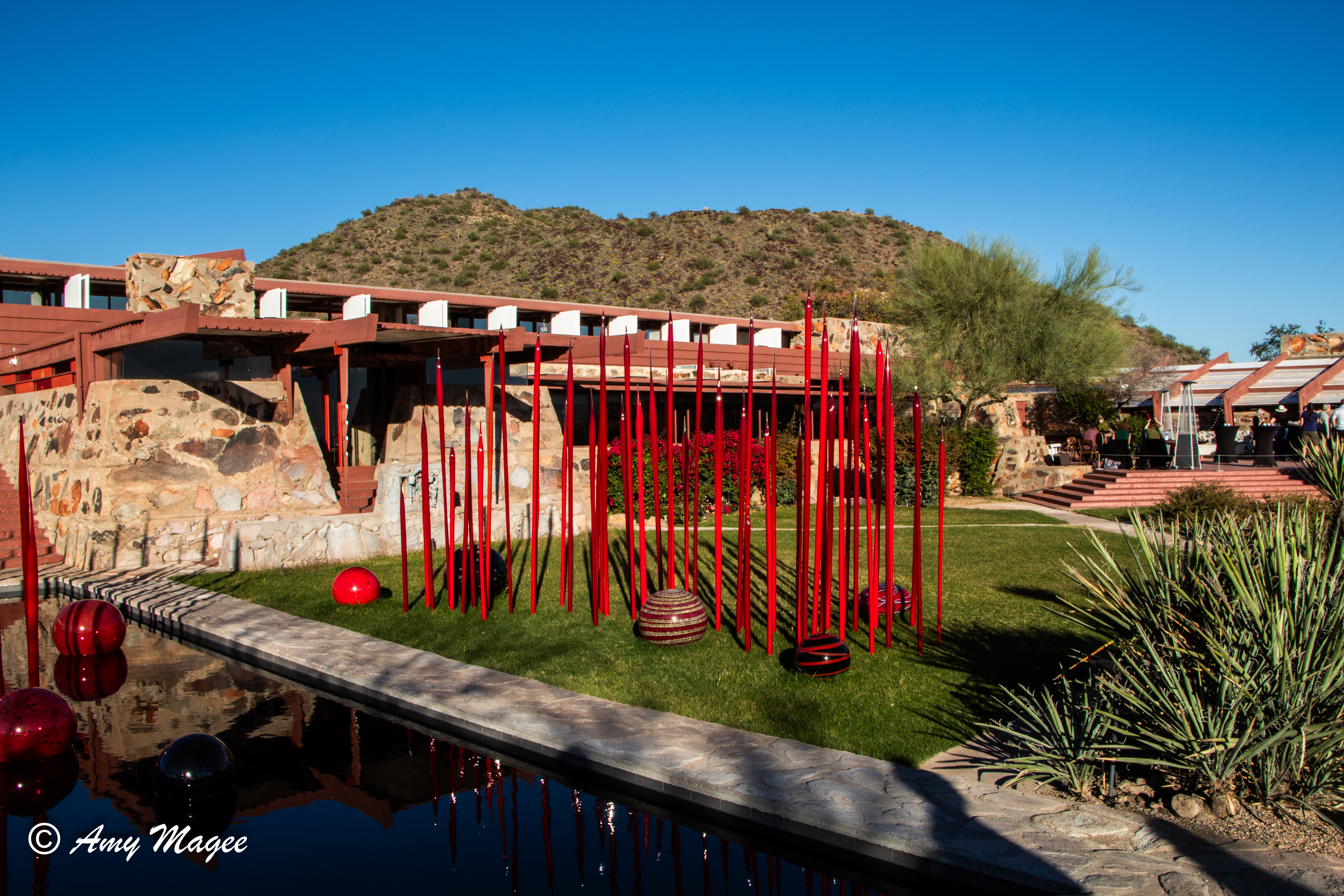
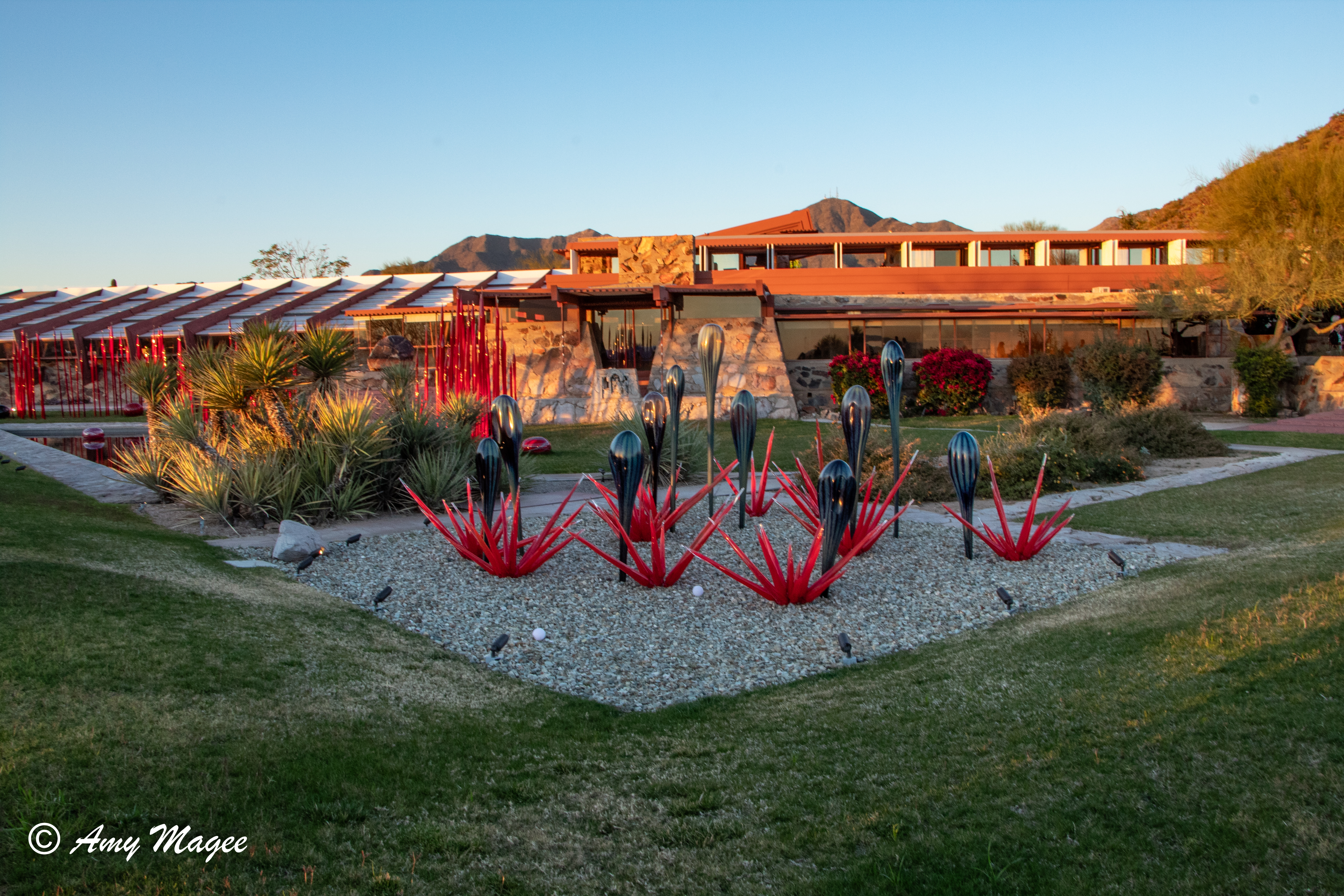
As seen in the pictures above it s very typical FLW, in that as you approach the house and grounds the buildings are very unassuming and do not stand out much from the landscape. This was a goal of most of his architecture, to blend in and compliment the landscape where they were built. Once you make it up from the parking area you find a beautiful courtyard, seen below, that ushers you along all the elements of the home. At the time that I went there was also a glass art exhibition installation on the grounds so while the glass sculptures, like in the picture below, compliment the home, they are not a regular part of the grounds.

Unlike some of Wright’s other homes this was not designed for other people. This was designed as a home, studio and school from the start so it’s not set up like a traditional home. There were multiple buildings with different purposes, placed in a cohesive manner on the grounds. There was a main building that housed the studio as well the main living areas such as Frank’s bedroom, the kitchen and dining room and social spaces. Since it was a school there were also small, single living quarters off the back that were built by students over the years, as a more private place for them to live. There was also a theater building used for entertainment that was detached from the main living areas. The courtyard is the welcoming area for all of those as well as a conduit to the different areas of the grounds. At the back of the main building, seen below, you get amazing views of the dessert as well as a grand outdoor walkway.
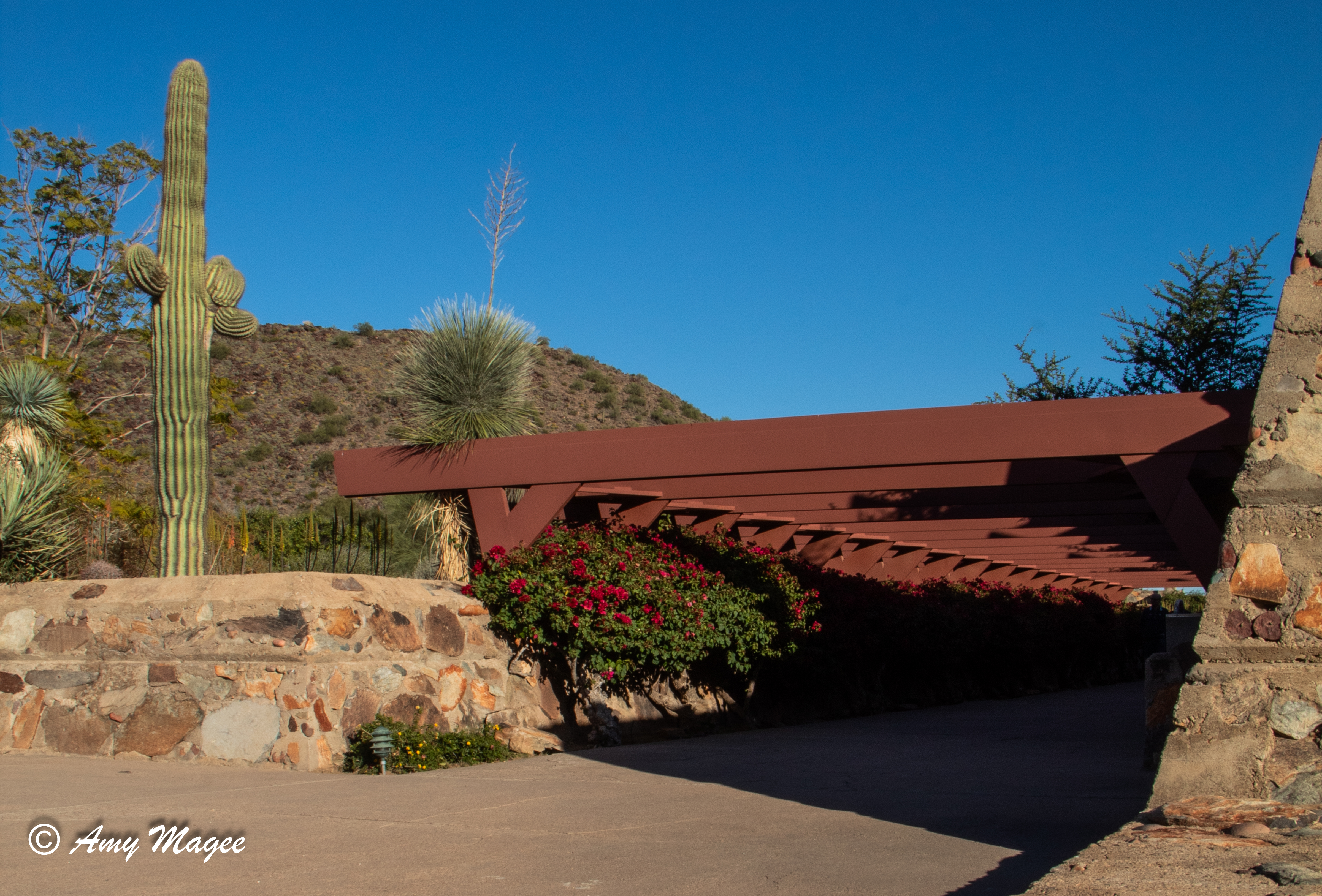
The drinks for the event were served out front with a view of the sunset, so we were directed to take the path to the right of the courtyard to see the front “yard” and main views of the home. The walkway below is in front of the windows of the studio, and leads to the shared living spaces. Again, note that the glass sculptures were not an original part of the home.

As you follow the path out front you come around to see the to the main entrance on the front, which is behind the large brick wall below. One of the most interesting pieces of information was that that those large windows on the top story, as well as the ones in the school, the large plate glass seen on the left below, did not have glass when the home was built. The home was designed with those large openings so that the home would get a breeze through it. Since it was used as a winter home and break from Wisconsin winters, it wasn’t really designed for summer in the desert. The glass has been added to add much needed air conditioning in the summer.

Although it’s not easy to identify in pictures, the pathway out front has a half octagon type shape, so the ends coming from the house lead you out to an overlook at the front of the property, that is also the edge of a cliff. In true FLW style the grounds leading out are also built to compliment the house as well as the landscape. The picture below is showing the front landscape in front of the living areas part of the house. The fireplace on the left is next to the main entrance from the front. Although e were told it was the main entrance, it has the typical FLW style of being very unassuming and not the grand entrance most large homes have. The steps to the right led to a nice courtyard/outdoor space with a fireplace where the drinks were served.
As you move along the path you get a more open view of the living sections of the house. Even from this view the main entrance does not stand out. The downstairs held the kitchen and a large dining space and the upstairs, where you see the large windows in the photo below, was the main living area. These areas were not part of the tour but there was a guide providing information on the house. Those windows are some of the ones mentioned earlier that had glass installed at a later time.

Once you make it to the very edge of the developed part of the land you understand why Frank chose this spot to build and why so many architects over the years chose to stay there as long as he would let them. The picture below captures the sunset at the edge of the cliff.

Once you see the sunset, you turn around and have just as beautiful of a view in the other direction. The picture below was captured doing just that. Again, the glass sculptures were not original to the house but they helped make an amazing view.
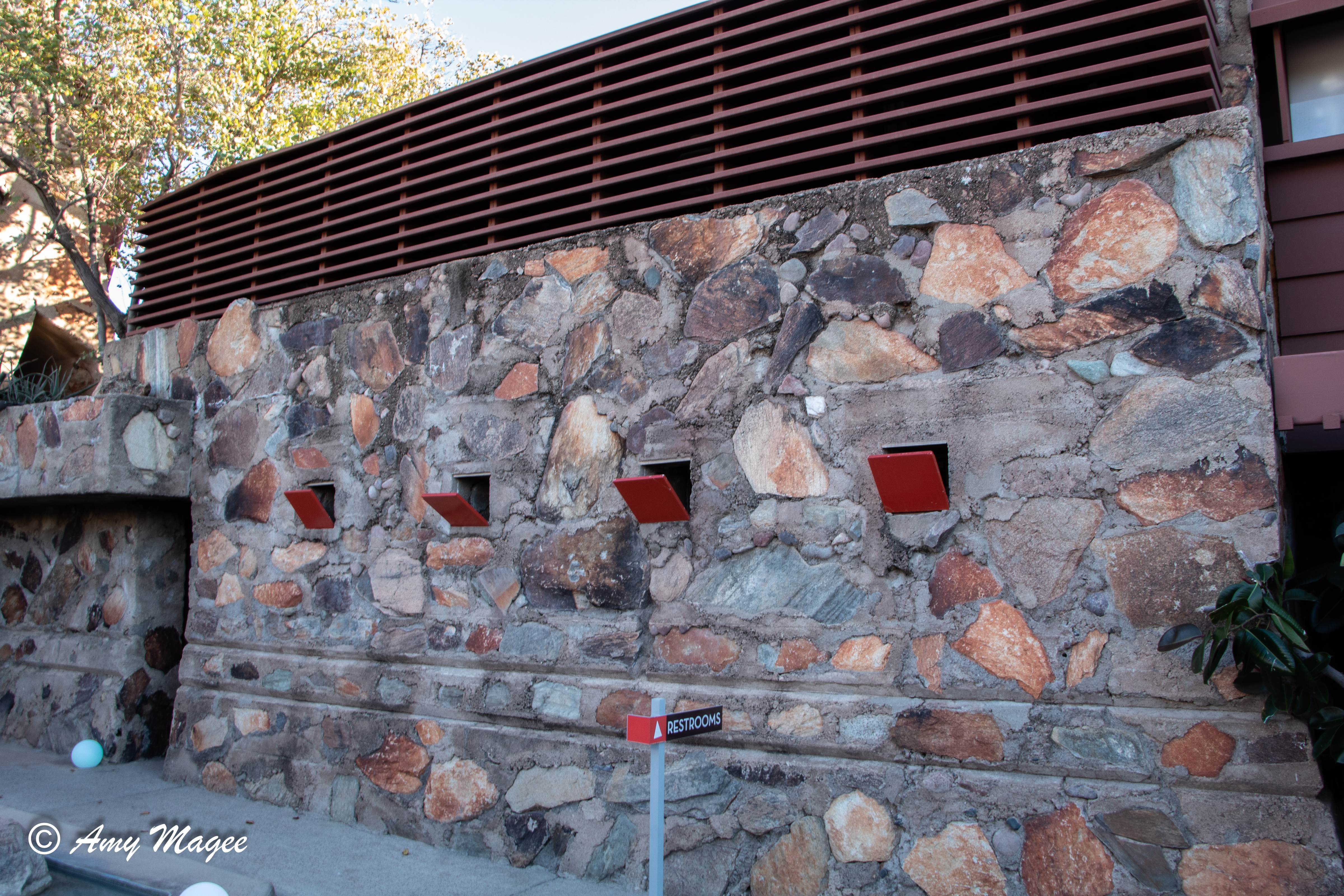
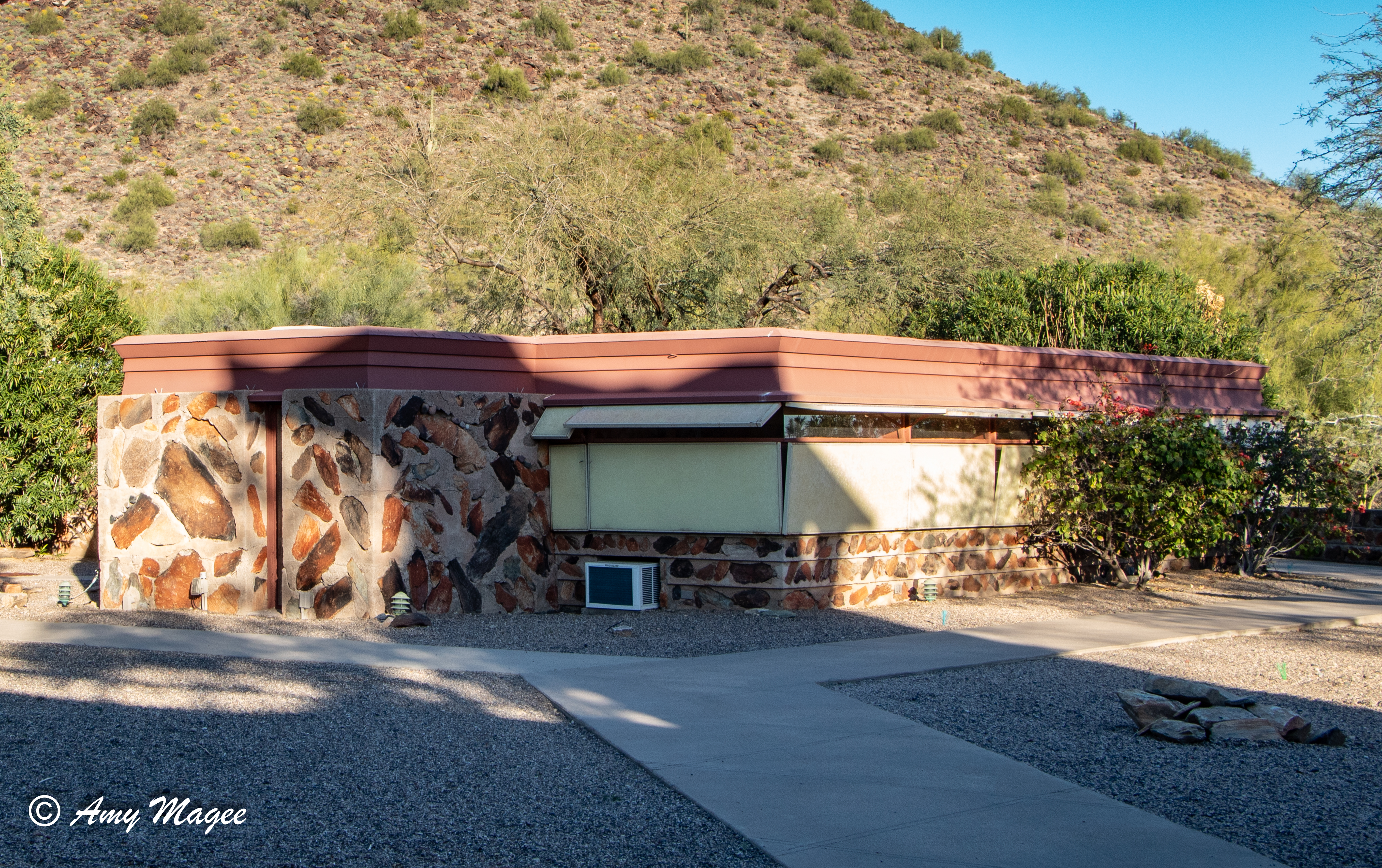
If you follow the path all the way around, back up to the house, you come to the courtyard on the right side of the house, as seen in the picture on the right below. The top left is a view of one of Frank’s original features to control the climate, vents in the wall to let air out or keep it in, depending on the need. The bottom left is the closest one of the homes built by an apprentice on the grounds. It can be seen from the back of the courtyard, but people still live in them, so they are off limits to tours. A very interesting fact is that one of the residents was an apprentice and original designer of the home and works with the FLW Foundation to ensure the history is preserved and told correctly, or at least how Frank would have wanted it.

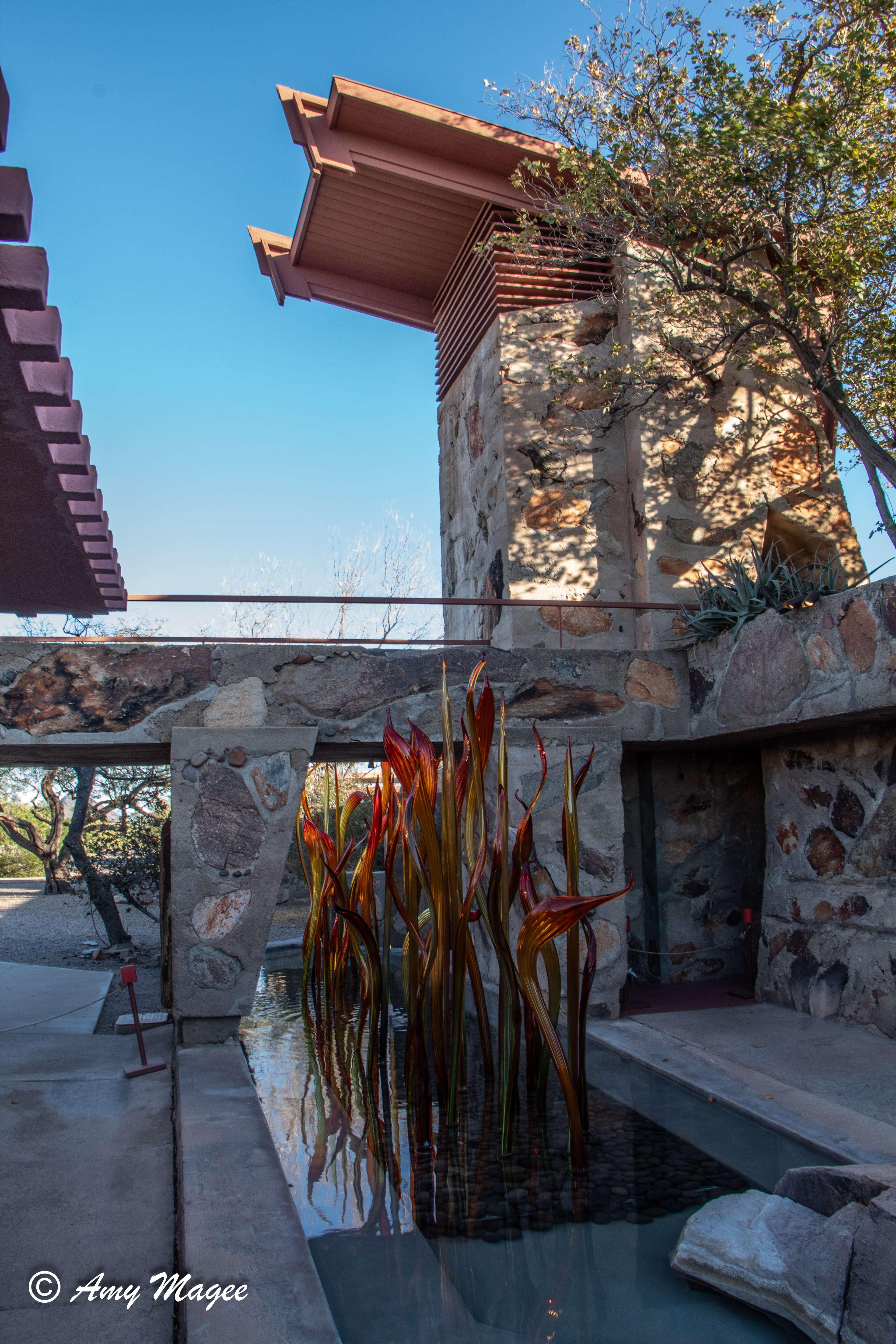
Once you go through the walkway at the courtyard, which is low and dark, as expected from a FLW design, you are greeted by spectacular views of the mountains behind the house. The glass sculpture below was beautiful with the sun shining on it and it’s hard to imagine it wasn’t designed to go there.
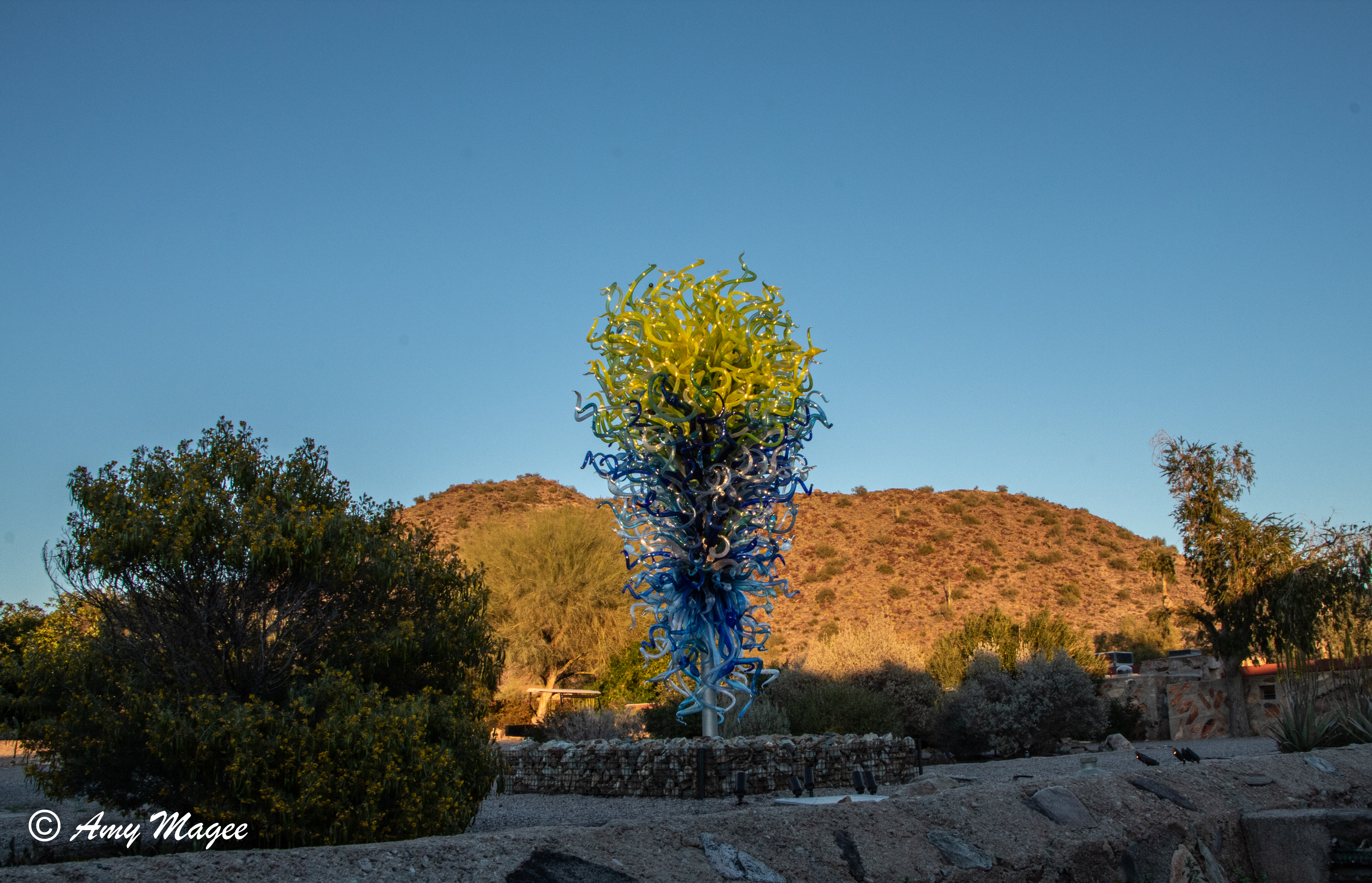
The view of the mountain could be enjoyed from the large dining room, which more closely resembled a cafeteria, since it was made to be the gathering place for meals for Frank and all the students and architects. It is within the long wall of windows seen below.
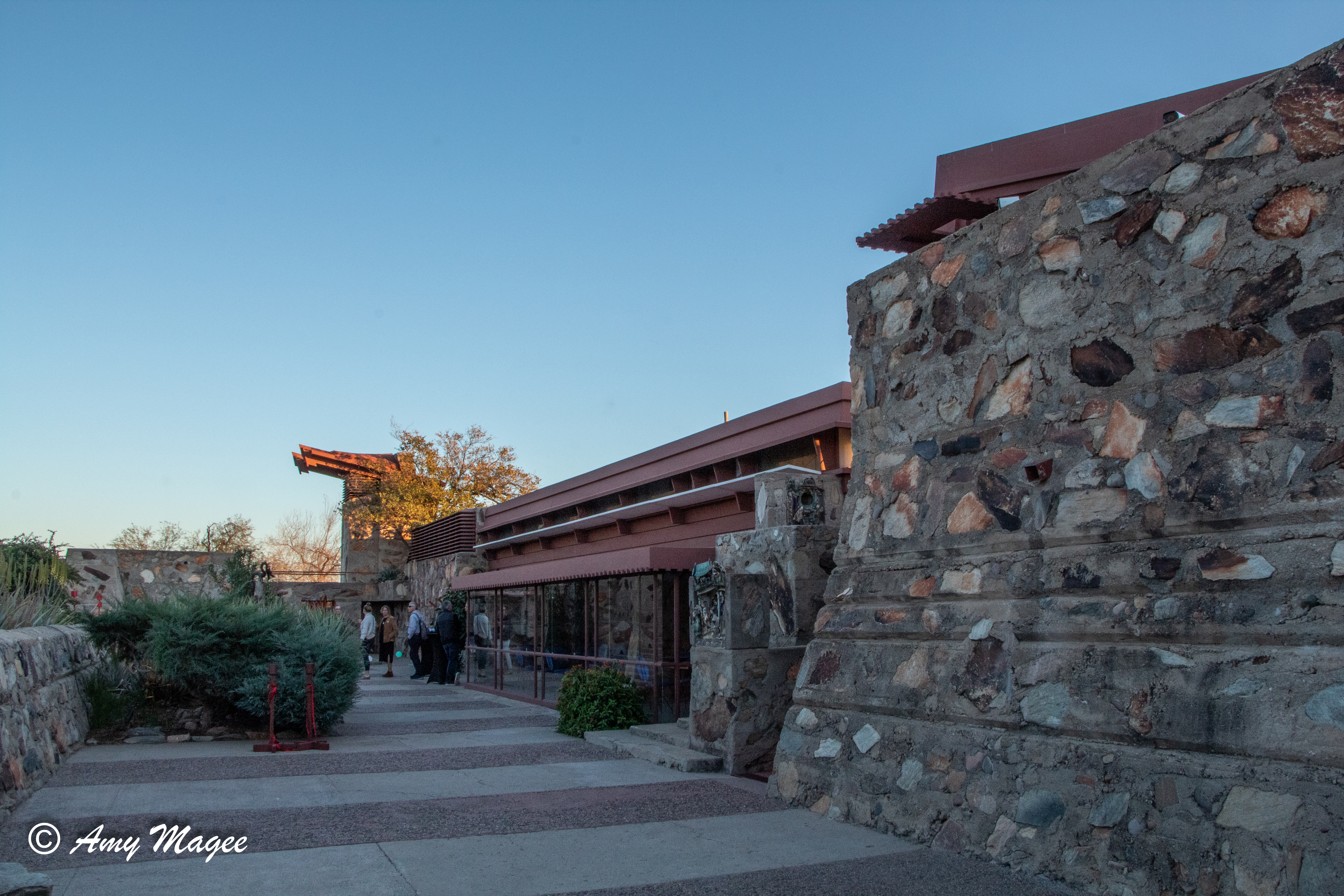
After passing the dining room you meet the long walkway with the pergola that you see when you arrive. If you continue along the path you find the entrance to the studio and school.
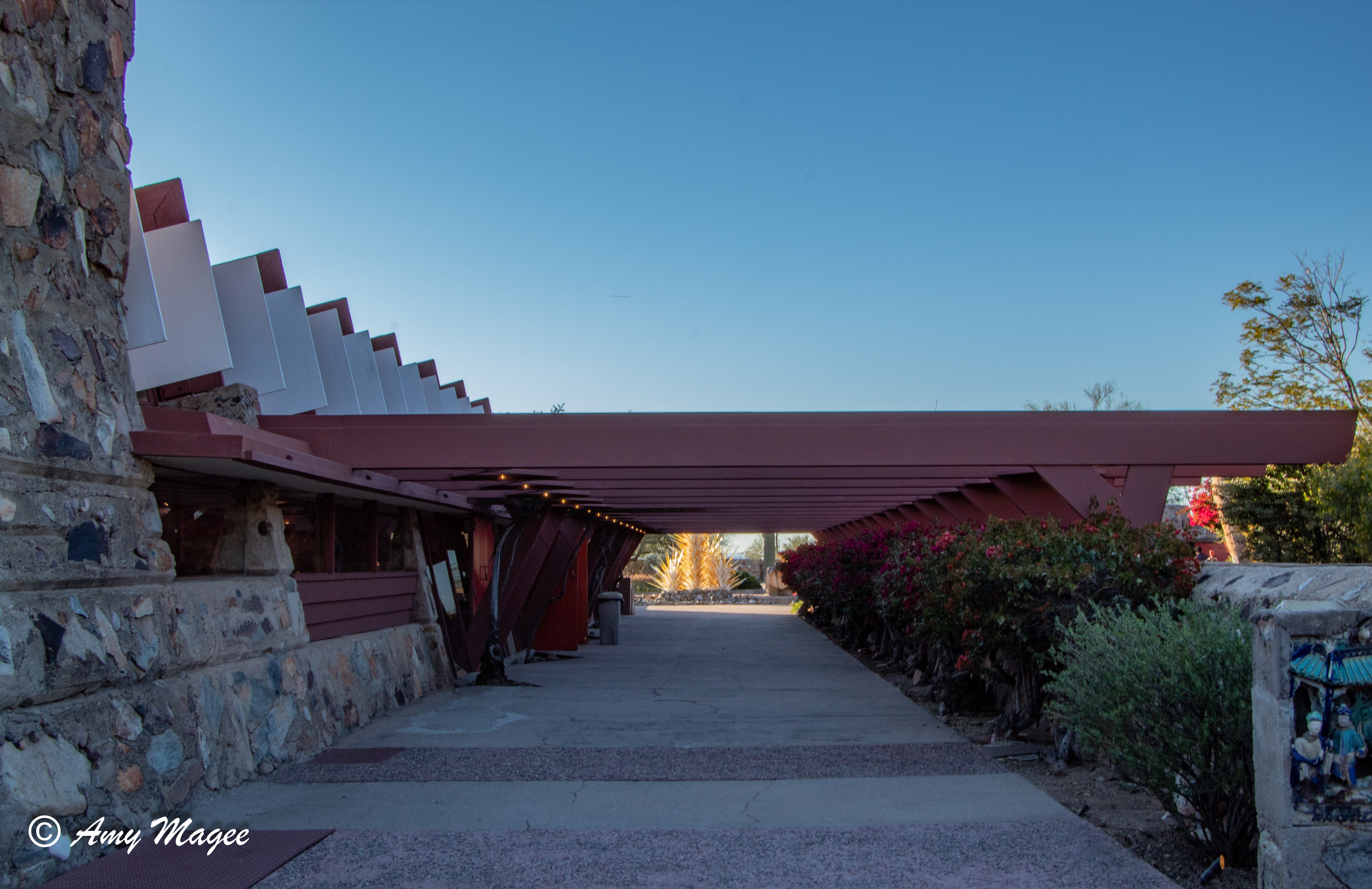
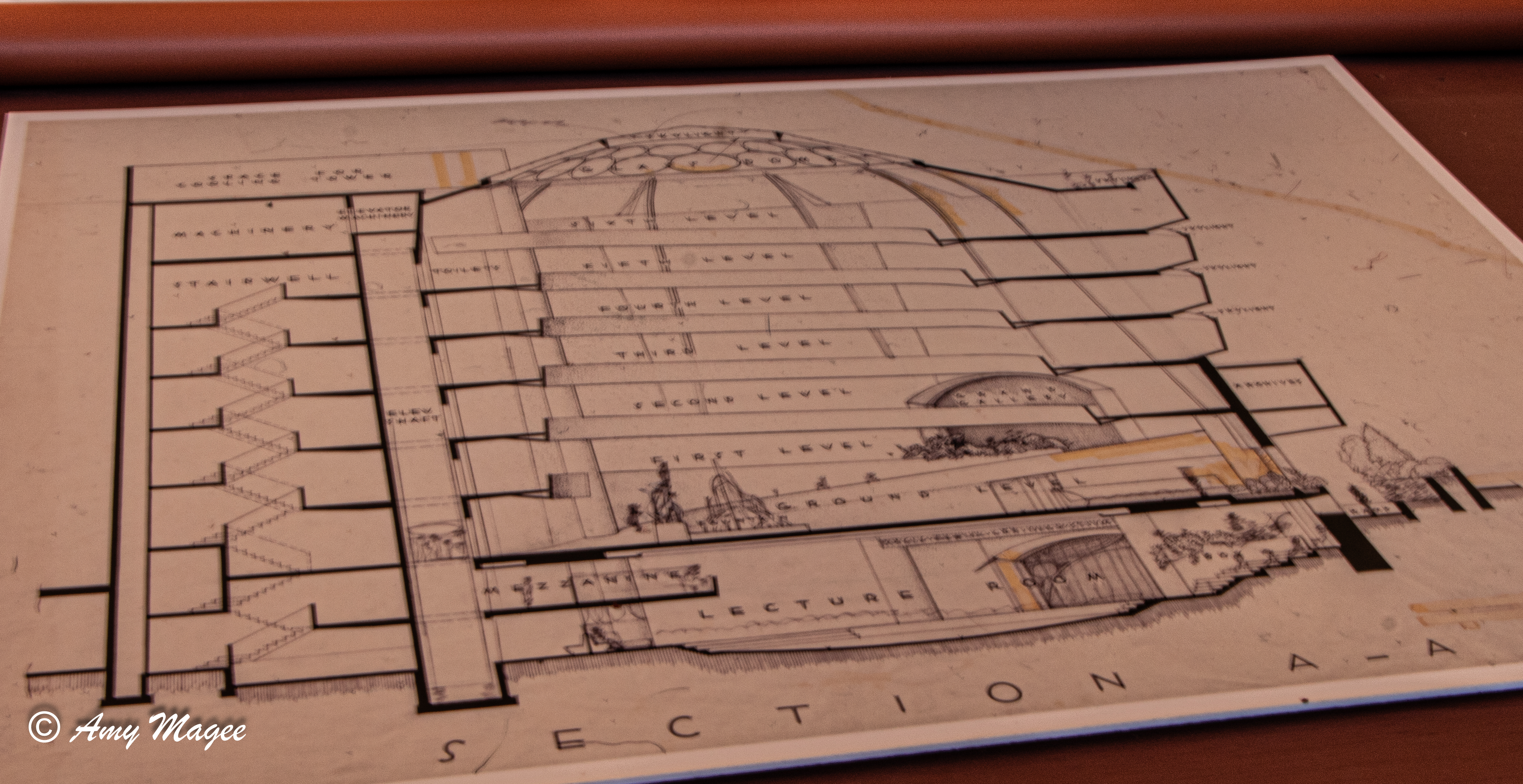
The studio, seen below is a beautiful space, even if it is not what Frank originally envisioned. All the windows at the front and back were originally open as well as the spaces between the translucent ceiling tiles. I visited in March when the weather was ideal and air conditioning was not needed, so it’s easy to see how the space would have been comfortable in the dessert climate, with the open airiness. The original drafting tables are still there and appear to be really cramped due to work being done in part of the room.
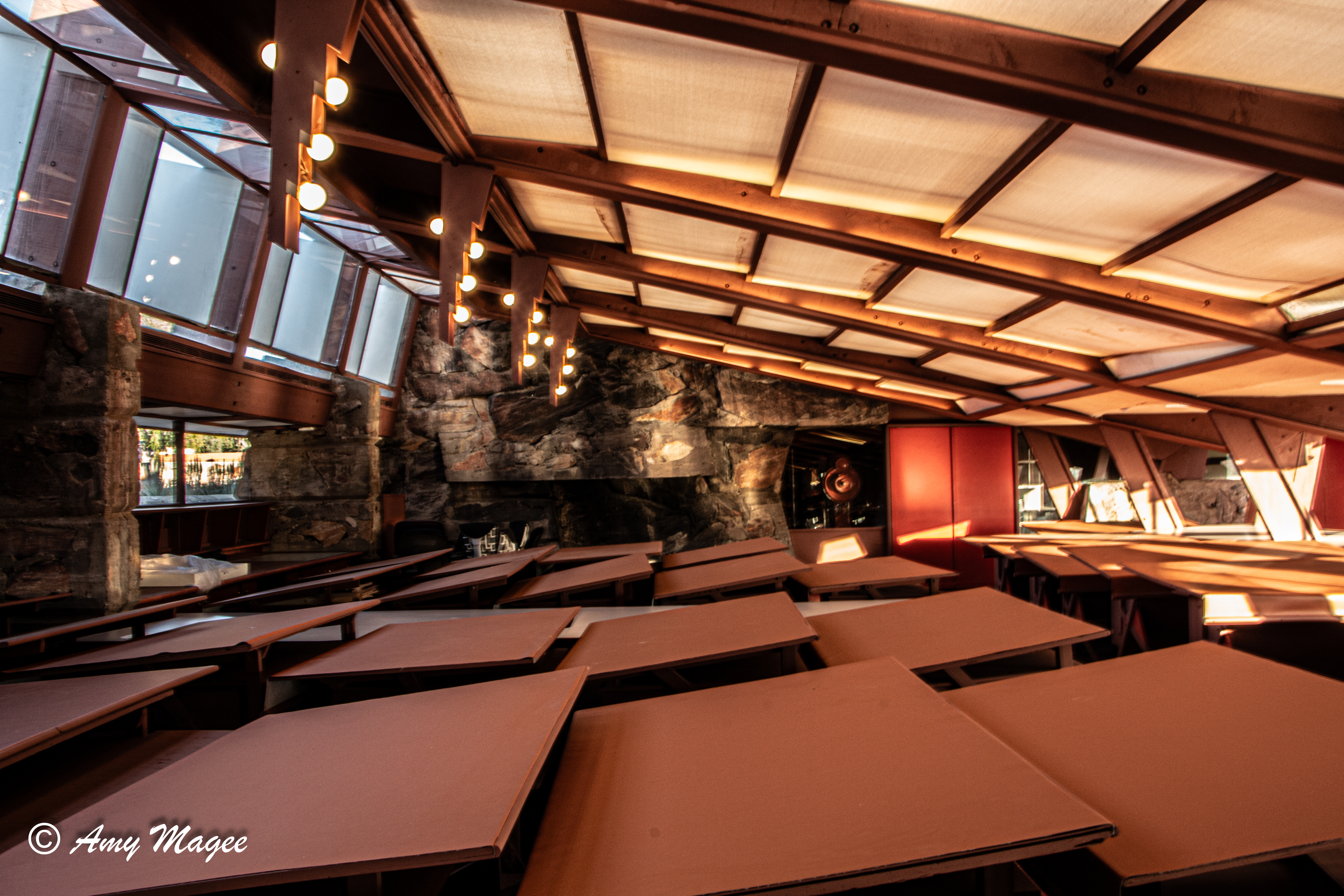

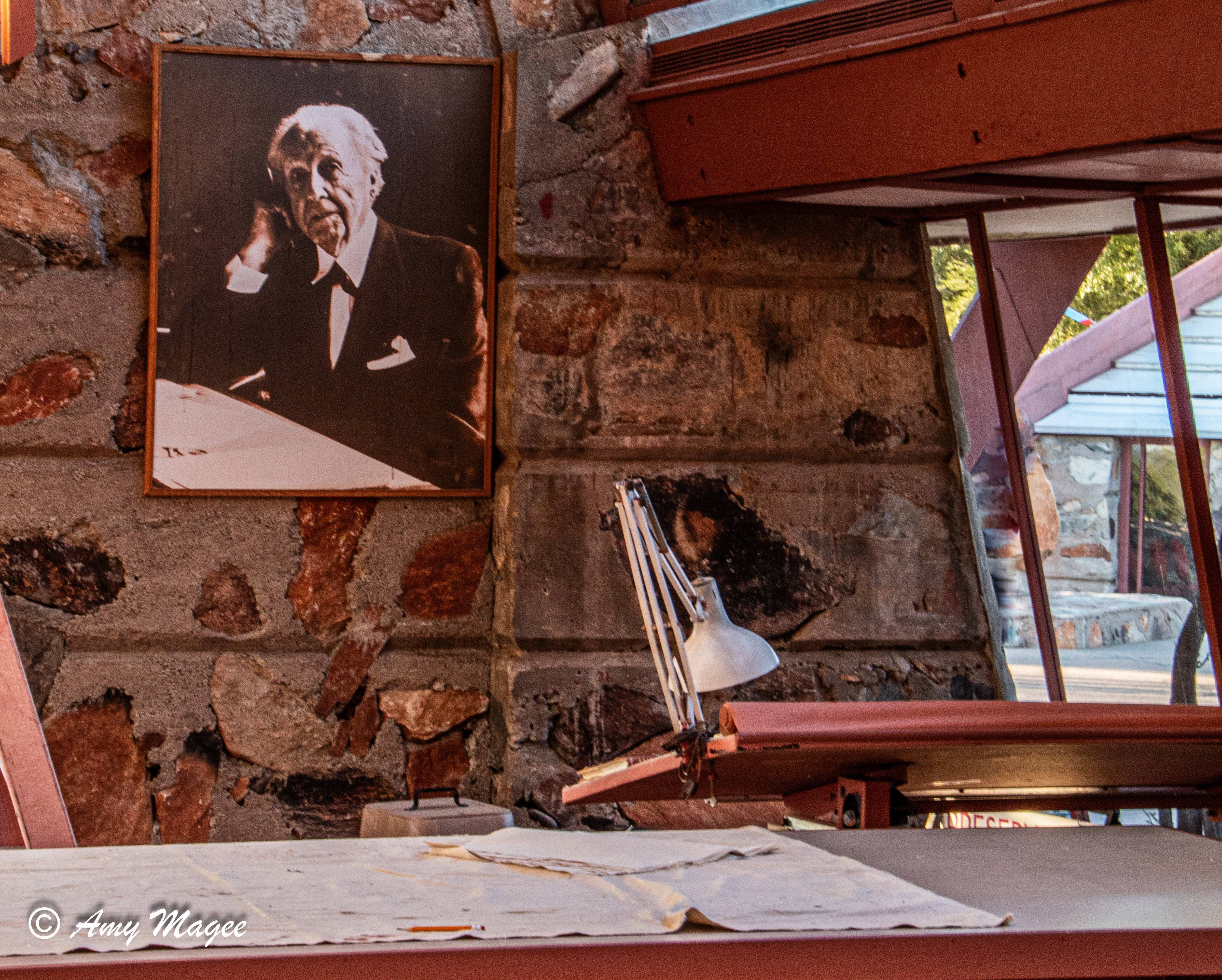
Below is the view of the front yard and valley you would have had from your drafting table in the studio. While it’s beautiful, I’m not sure that it’s necessarily motivating. It would be hard to not just sit and look at the view, especially since at that time, there would not have been power lines and transformers in the view.
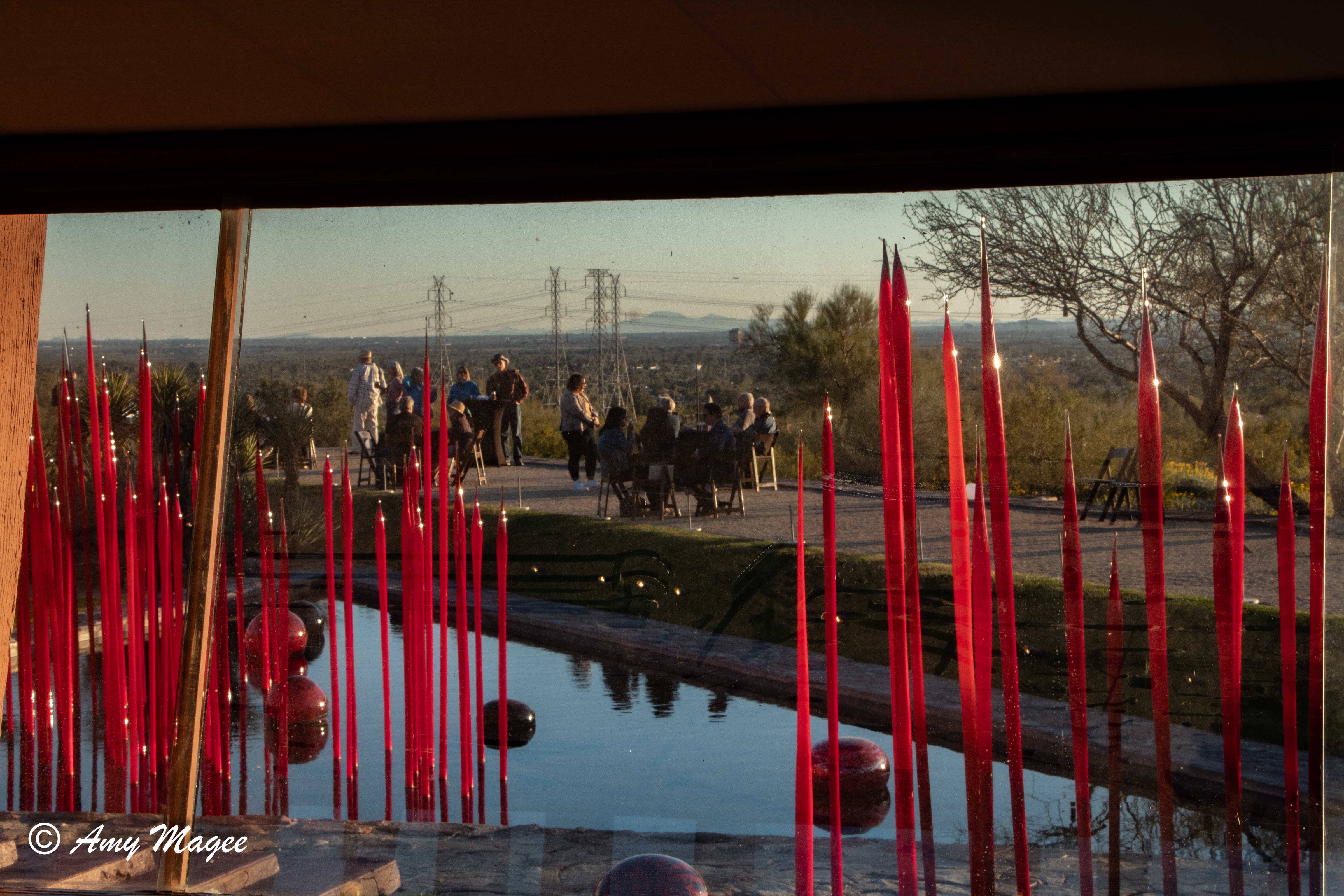
Once you exit the studio you are back at the courtyard. While it is beautiful on it’s own, it holds another gem that is not easily seen or expected. The opening in the back leads to a private theater, that is a weird mix of true Frank Lloyd Wright while at the same time being a little fancier and more formal than he is known for.

As you approach the theater you notice another small space to the left of the opening. The windows seen in the picture on the left below are the windows to Frank’s personal office. Sadly, it was not part of the tour, but it was nice to see and you can imagine clients meeting him there and having the view of the courtyard and house that I was welcomed to when I arrived.


The picture on the right above is the first view into the theater. The layout was so that the screen and stage were actually at the entrance, so in order to get to a seat without disturbing anyone, there was a hallway to the right that took you to the back. That hallway can be seen below.
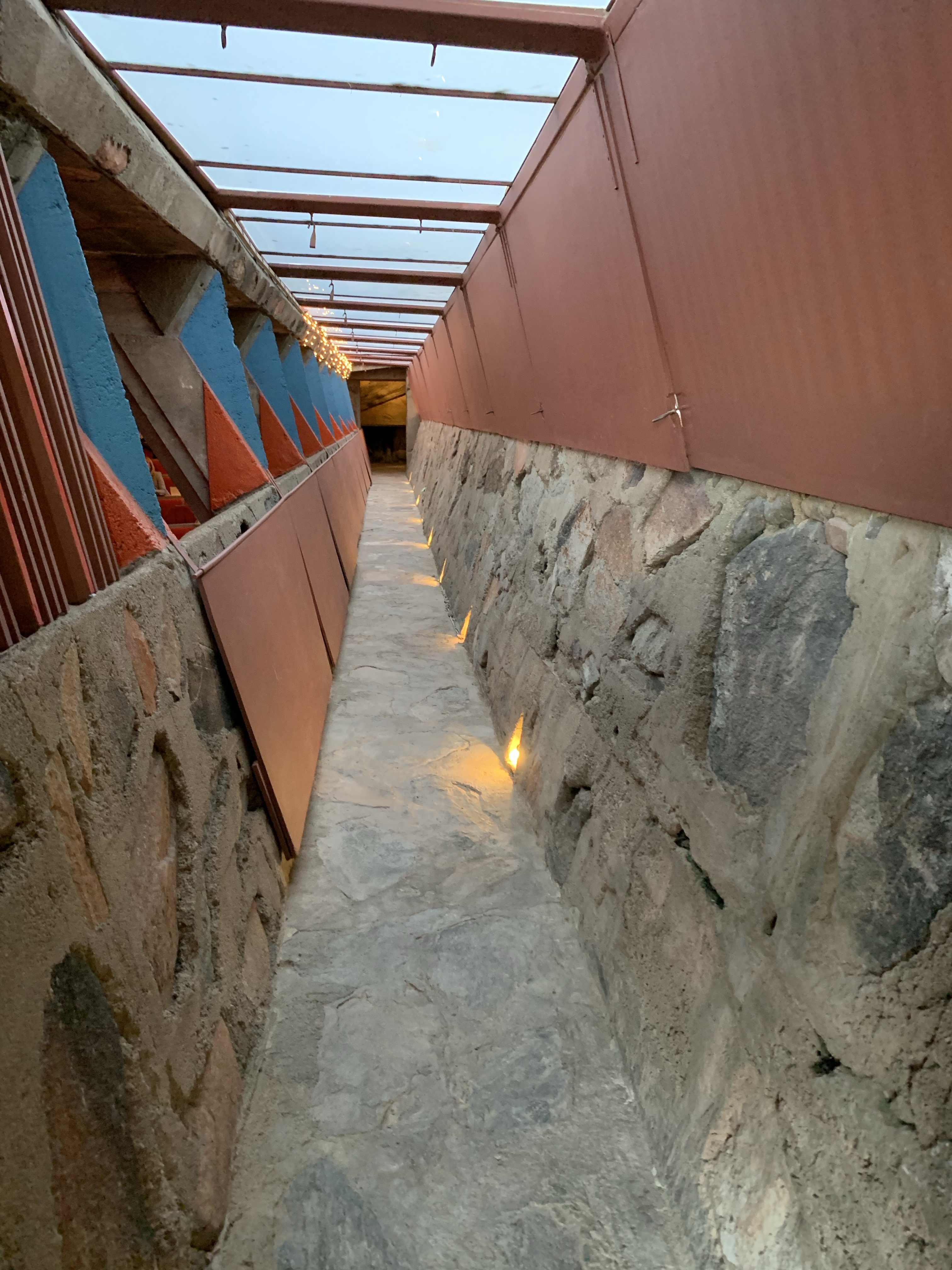
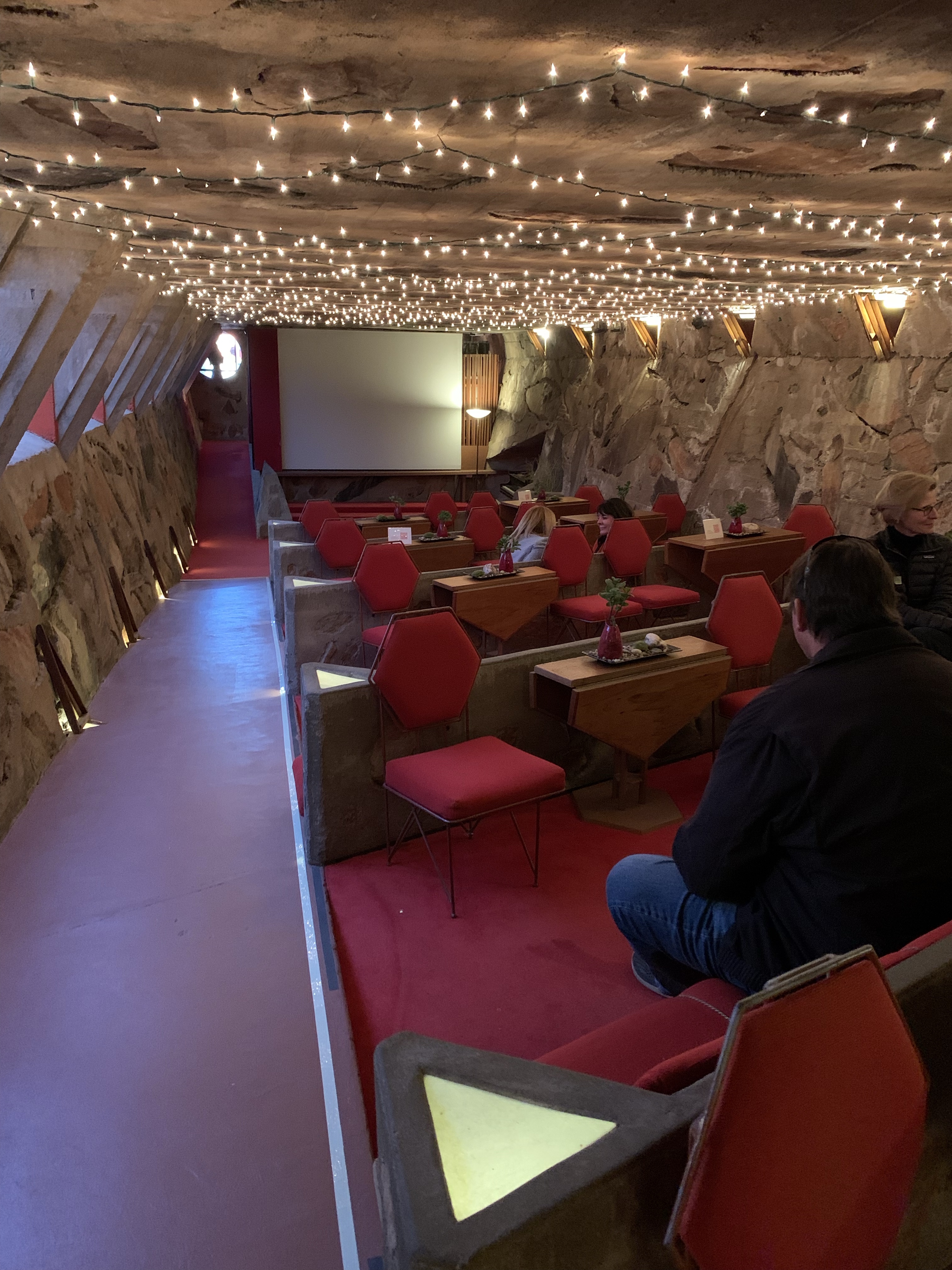
The theater was made to be multifunctional. There was regular bench seating facing the screen, as well as small tables and chairs for more formal service. The docents working the event said it was also often just used as a nightclub / hangout space for the students and apprentices when they wanted a break from Frank or more accurately his wife. Note that the wall sconces are original designs, but the hanging string lights are of course additions.

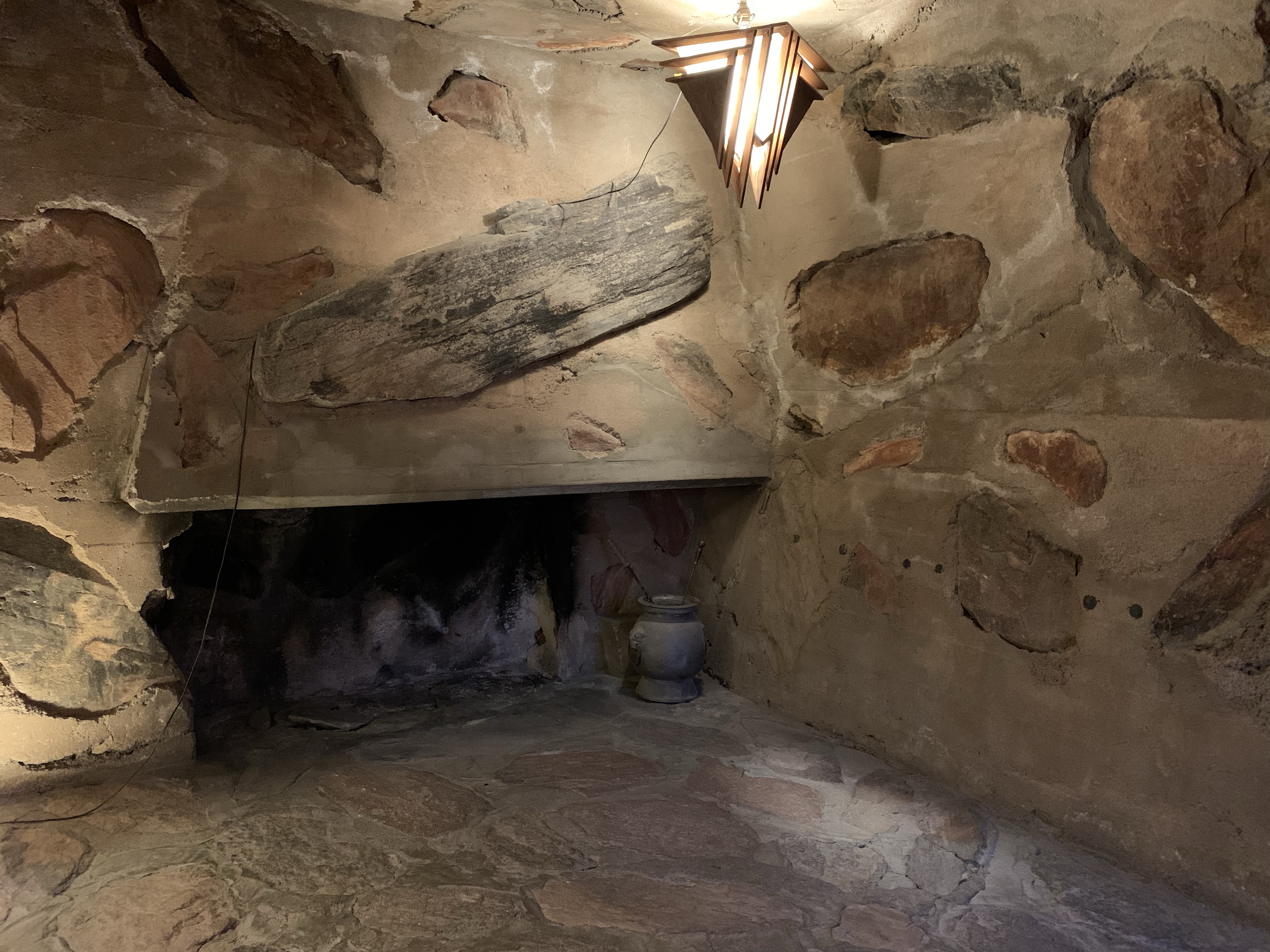
That is where my tour and evening ended. Although I would have liked to see more of the inside, I just consider it a reason to go back. I will leave you the same way I left, with the last view below of the courtyard, with the glass sculpture lit and the last few rays of setting sun. A beautiful serene scene, that both stands out and fits right into it’s surroundings.


 Amy and Bella's Teardrop Adventures